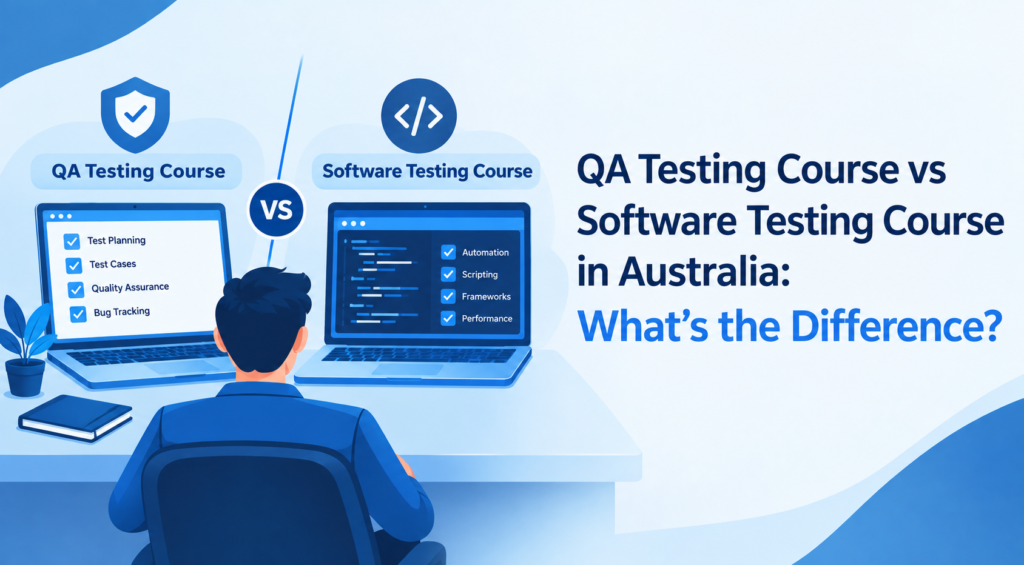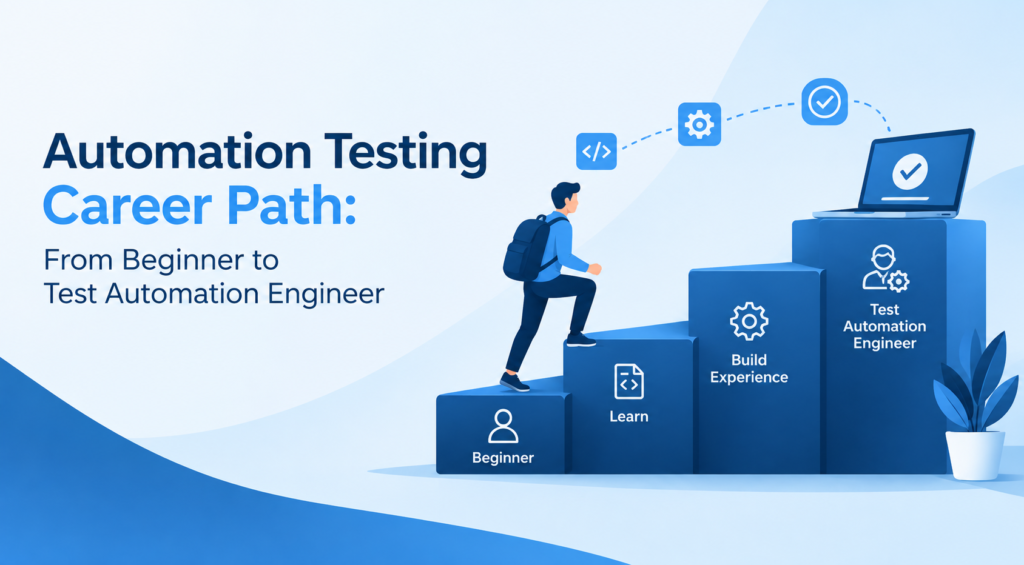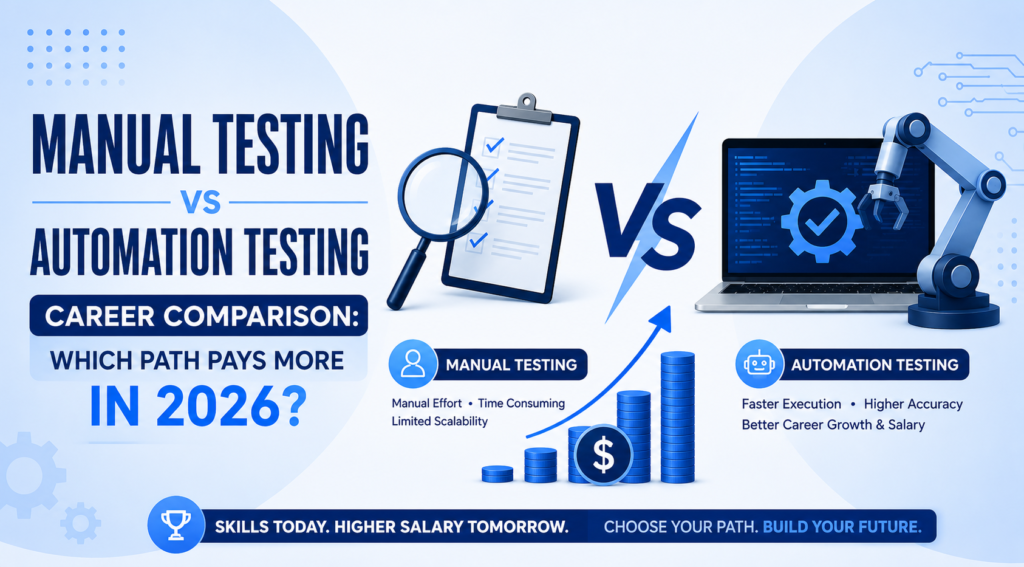
The software testing industry is growing rapidly across the globe. Today, two major career paths dominate this field: manual testing and automation testing.
Both offer different opportunities, rewards, and challenges. Understanding which path aligns with your goals can help you make a smarter career decision.
What Is Manual Testing?
Manual testing involves human testers checking software for bugs, errors, and usability issues. Testers follow test cases, explore applications step by step, and validate whether the software works as expected.
This role requires strong attention to detail, problem-solving skills, and an understanding of real-world user behaviour. Manual testers do not always need coding skills to work effectively. Their focus is often on user experience, functionality, and business requirements.
Key responsibilities include:
- Running tests without automation tools
- Finding and reporting defects clearly
- Exploring software functionality in detail
- Testing user interfaces thoroughly
What Is Automation Testing?
Automation testing uses specialised tools, scripts, and frameworks to test software faster and more efficiently. These tools can run test cases repeatedly without continuous human intervention.
Automation testers write code to automate repetitive testing tasks. This role requires programming knowledge, technical understanding, and familiarity with automation frameworks. Automation testing helps teams speed up testing, improve accuracy, and receive faster feedback on software quality.
Automation testing offers:
- Faster test execution across multiple scenarios
- Reduced human error in repetitive testing tasks
- Better coverage for complex applications
- Quicker feedback on software quality
Salary Comparison: Manual vs Automation Testing
Manual Testing Salaries
Manual testers can earn competitive salaries in the software testing industry. Entry-level roles often provide a strong starting point for those entering the technology field. With experience, testers can grow into senior QA, test lead, business analyst, or quality assurance management roles.
Specialisation in quality assurance processes, domain knowledge, and test strategy can further improve earning potential.
Automation Testing Salaries
Automation testers generally earn higher salaries than manual testers because the role requires stronger technical skills. Knowledge of tools, scripting, frameworks, and programming languages can increase career opportunities and salary potential.
A Selenium C# automation testing course or similar training program can help professionals build valuable automation skills. Senior automation roles can also lead to opportunities in test architecture, DevOps, SDET, and quality engineering.
Why Choose Automation Testing?
Career growth can be faster in automation testing roles because technical skills are highly valued by employers. As organisations continue to adopt Agile, DevOps, CI/CD, and AI-driven development practices, automation testing skills are becoming increasingly important.
Automation testing Java course online in Australia can provide strong upskilling opportunities for professionals looking to move into more technical QA roles.
Benefits of choosing automation testing include:
- Higher average salary potential across experience levels
- Stronger job security in competitive markets
- More remote work opportunities
- Faster progression into senior technical roles
Developing Automation Testing Skills
Hands-on experience is one of the most important factors for becoming a successful automation tester. Training programs can help you master essential tools, frameworks, and testing concepts.
Playwright automation testing training, for example, teaches modern automation frameworks used by many software teams today. A structured learning path can help you build confidence and develop practical skills for real-world projects.
Finding Quality Training Programs
Quality training can make your career transition smoother and more effective. Look for programs that cover practical testing scenarios, real-world projects, and hands-on tool experience.
The best Playwright automation course online options should teach in-demand skills, provide practical exercises, and help you understand how automation is used in real software delivery environments.
Certifications and project-based learning can also strengthen your professional profile and improve your credibility in the job market.
Key Differences to Consider
| Factor | Manual Testing | Automation Testing |
|---|---|---|
| Salary | Moderate | Higher |
| Technical Skills | Lower requirement | Higher requirement |
| Career Growth | Steady | Faster |
| Learning Curve | Easier | Steeper |
| Job Demand | Stable | Growing |
Making Your Career Decision
Both career paths offer valuable opportunities in software testing. Your decision should depend on your interests, strengths, and long-term career goals.
Manual testing is a strong choice for detail-oriented professionals who enjoy exploring applications, understanding user behaviour, and identifying quality issues from a user’s perspective.
Automation testing is ideal for those who enjoy coding, problem-solving, frameworks, and technical challenges.
Your choice does not have to be permanent. Many professionals begin with manual testing and later move into automation testing. Others start directly with automation through structured training. Continuous learning is the key to staying competitive in either path.
Conclusion
Choosing between manual and automation testing can shape your career direction in software quality. Automation testing generally offers higher salary potential and faster career growth because of its technical nature. However, manual testing remains an important and valuable skill in the software testing lifecycle.
The right path depends on your skills, interests, and willingness to learn. With the right training and guidance, both manual and automation testing can lead to stable and rewarding career opportunities.
Start your journey today with professional training from QTechEd. Our programs are designed to help you build practical skills, gain confidence, and prepare for real-world testing roles.
Contact us to explore your software testing and automation career options.
Frequently Asked Questions
1. Which testing career earns more money overall?
Automation testing generally offers higher salary potential because it requires technical expertise, coding skills, and knowledge of automation frameworks. However, experienced manual testers can also earn competitive salaries, especially in specialised domains.
2. Do I need coding skills for manual testing jobs?
No, manual testing does not usually require coding skills for entry-level roles. Strong analytical thinking, attention to detail, communication skills, and problem-solving ability are more important.
3. What programming languages should I learn for automation testing?
Java, Python, and C# are popular programming languages for automation testing. The best language to learn depends on your target job market, preferred tools, and career goals.
4. How long does it take to become an automation tester?
Many professionals can transition into automation testing within three to six months with focused training and regular practice. The timeframe may vary depending on your technical background and learning consistency.
5. Are manual testers becoming obsolete?
No, manual testing remains essential for exploratory testing, usability testing, user experience validation, and business-critical scenarios. Automation is growing, but manual testing continues to play an important role.
6. Which career path offers better remote work opportunities?
Automation testing roles often offer more remote work opportunities because the work is highly tool-based and technical. However, many manual testing roles can also be performed remotely, depending on the organisation.
7. Should I start with manual testing before learning automation?
Many professionals start with manual testing to understand testing fundamentals before moving into automation. However, it is also possible to start directly with automation if you follow a structured training path.
8. What certifications can boost automation testing career prospects?
Relevant testing certifications, tool-specific credentials, and practical project experience can improve your profile. Industry-recognised certifications can also help increase your credibility with employers.
9. Is automation testing suitable for career changers?
Yes, automation testing can be a strong option for career changers. With structured training, hands-on practice, and dedication, professionals from different backgrounds can successfully move into automation testing.
10. How do I choose between manual and automation testing roles?
Consider your technical interests, problem-solving style, learning preferences, and career goals. You can also explore both areas through training programs before deciding which path suits you best.