A Career Shift That’s More Possible Than Ever
Not long ago, entering the IT industry without a technical degree felt nearly impossible. Today, the situation is very different. Companies increasingly prioritize practical skills, adaptability, and problem-solving over academic background.
This shift has opened doors for professionals from administration, finance, education, retail, customer service, and many other fields to successfully transition into IT roles.
The journey is not about starting over, it is about redirecting your existing strengths toward a new industry.
Understand Why You Want to Move into IT
Before learning any tools or programming languages, the most important step is clarity.
Ask yourself:
- Are you seeking better salary growth?
- Do you want long-term career stability?
- Are you interested in technology and innovation?
- Do you want remote or flexible work options?
Knowing your motivation will help you stay focused when the learning curve feels steep.
Identify Transferable Skills You Already Have
Many career switchers underestimate how valuable their existing skills are in IT.
If you have experience in communication, organisation, analysis, customer interaction, or problem-solving, you already possess strengths that the IT industry needs.
For example:
- Administrative professionals excel at documentation and coordination.
- Customer-facing roles develop strong troubleshooting and communication abilities.
- Teachers and trainers understand structured learning and clear explanation.
These capabilities form a strong base for roles such as software testing, IT support, business analysis, and project coordination. You are not starting from zero — you are building on a foundation.
Choose the Right Entry Point into IT
Many beginners choose software testing as their first entry point into the technology industry because it focuses on analytical thinking and attention to detail rather than deep programming knowledge.
Enrolling in an Online Software Testing Course or Software Testing Career Program or Business Analytics Program can help build a strong foundation while providing practical exposure to real-world testing processes.
Always select a beginner-friendly pathway based on your interests and strengths.
Common entry roles include:
- Software Testing or Quality Assurance
- Technical Support or Service Desk
- Business or Systems Analysis
- Cloud or infrastructure support
Research job descriptions to understand what employers expect, then tailor your learning toward those requirements.
Focus on Practical Learning
IT is hiring managers value practical ability more than theoretical knowledge.
Focus your learning on:
- Understanding how software or systems work
- Using industry tools (testing tools, ticketing systems, collaboration platforms)
- Writing documentation or reports
- Practising real workflows such as testing, troubleshooting, or analysis
Hands-on practice builds both skill and confidence, and it gives you real examples to discuss in interviews.
Build Experience Before You Get the Job
Along with hands-on practice, completing an online program that offers hands on training can help demonstrate commitment to employers and strengthen your professional profile when applying for entry-level testing roles.
Experience does not always mean paid employment. You can demonstrate capability by:
- Testing demo applications
- Writing sample documentation
- Participating in online labs or challenges
- Joining career accelerator programs
These activities give you proof of capability, which is often more valuable than certificates alone.
Re-frame Your Resume and Professional Story
A successful career transition requires strong positioning.
Instead of presenting your past as unrelated, connect it to your new path. Highlight how your previous experience supports your IT role.
For instance:
- Customer service → understanding user issues
- Administration → process management and documentation
- Operations roles → workflow optimisation and coordination
Recruiters should see continuity, not disconnect.
Stay Patient but Consistent
Most successful transitions into IT take several months of focused effort.
Instead of rushing, follow a simple cycle:
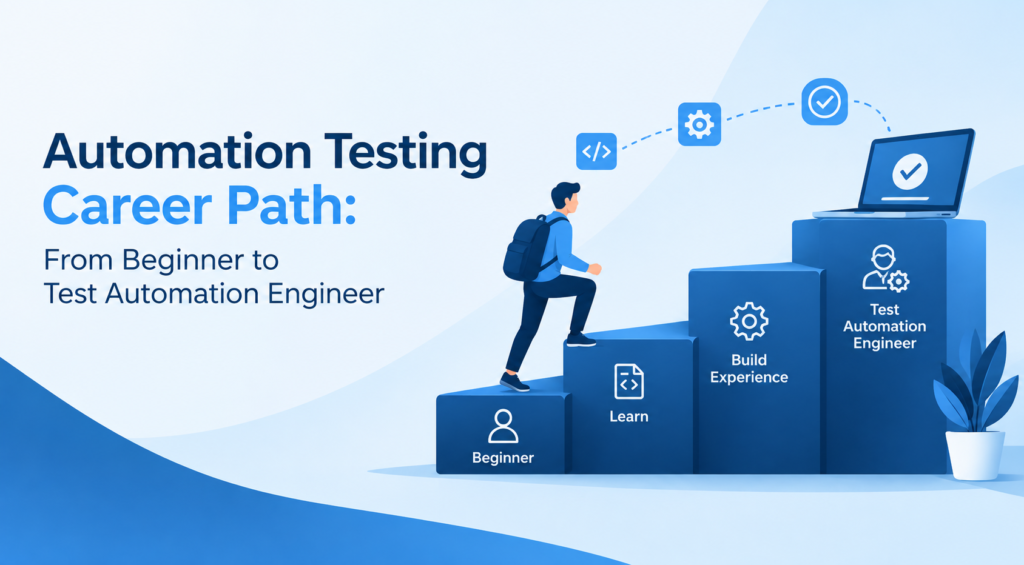
Learn → Practise → Apply → Improve
Each step strengthens your skills and brings you closer to your first IT role.
Finally: Your Background Is Not a Barrier — It’s an Advantage
Conclusion: Your Background Is Not a Limitation
The IT industry does not only need programmers. It needs testers, analysts, coordinators, communicators, and problem-solvers.
Your past experience has already shaped many of these abilities. The transition into IT is simply about aligning them with technology-driven work.
With focused learning, practical exposure, and clear positioning, moving from a non-technical background into IT is not only achievable it is increasingly common.
For many career switchers, starting with an Online Course for Software Testing Career provides a clear roadmap from learning the fundamentals to preparing for real job opportunities in the IT industry.
Your journey does not start with technical tools.
It starts with a decision to grow.