You don’t need to spend years wondering whether you’re “technical enough” to become a DevOps Engineer.
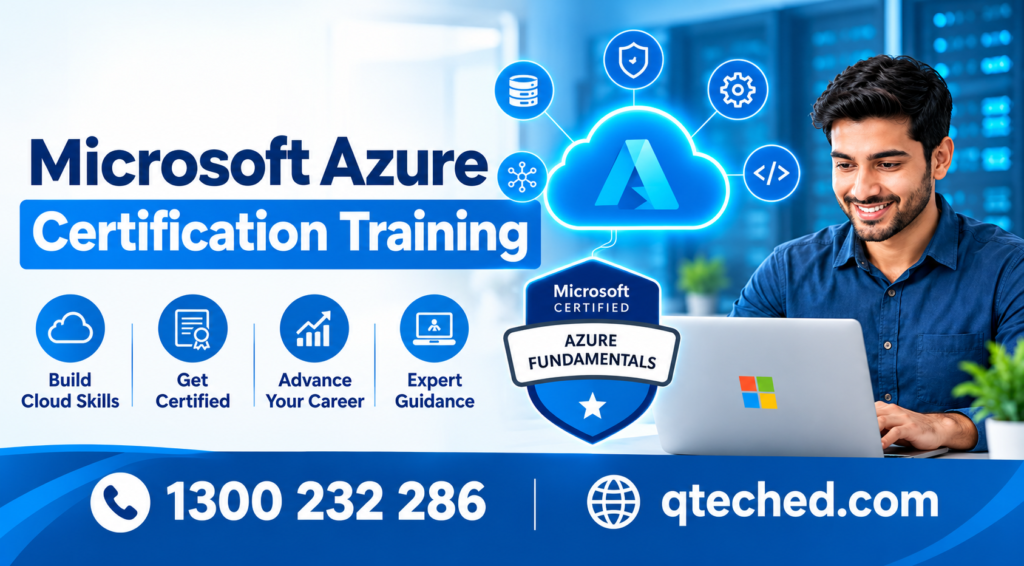
What you need is the right combination of cloud skills, automation knowledge, practical experience, and a clear learning path. That’s where Microsoft Azure certification training can give your career a serious advantage.
What Does a Good DevOps Engineer Actually Need?
DevOps isn’t just about knowing cloud platforms. A strong DevOps Engineer connects development, operations, automation, security, and continuous delivery.
You’ll need to understand areas such as:
- Cloud infrastructure and Azure services
- CI/CD pipelines
- Infrastructure as Code
- Containers and orchestration
- Version control
- Monitoring and troubleshooting
- Automation and scripting
- DevSecOps practices
The good news? These are skills you can systematically develop.
Why Azure Skills Matter in DevOps
Azure has become an important cloud environment for organisations building, deploying, and managing modern applications.
That makes Microsoft Azure certification training valuable for professionals who want structured exposure to cloud-based DevOps practices rather than learning disconnected tools one at a time.
Instead of asking, “What should I learn next?”, you can follow a defined path that connects technologies and practices together.
From Certification Knowledge to Real DevOps Capability
Here’s the critical distinction: “Certification alone doesn’t make you a great DevOps Engineer.”
It’s what you can do with that knowledge that matters.
Use your learning to understand how to:
- Build and manage cloud environments
- Automate repetitive deployment tasks
- Create reliable CI/CD workflows
- Identify infrastructure issues
- Improve deployment consistency
- Implement monitoring and security controls
- Collaborate effectively with development teams
Practical applications turn theoretical knowledge into career-ready capability.
Worried About Starting Too Late?
Many aspiring DevOps professionals get stuck because the technology landscape looks overwhelming.
Azure, containers, pipelines, scripting, security, automation – it can feel like there’s an endless list to master.
A structured Microsoft Azure certification training pathway can make the journey more manageable by helping you build knowledge progressively instead of trying to learn everything simultaneously.
Focus on one capability at a time, practise it, understand why it matters, and then connect it to the wider DevOps workflow.
Can Certification Help You Stand Out?
Absolutely, but think beyond the certificate.
Employers want people who can understand business requirements, solve infrastructure problems, automate processes, and help teams deliver software more reliably.
A strong learning programme can help you develop:
- Recognisable cloud credentials
- Practical DevOps knowledge
- Better technical confidence
- A stronger professional profile
- A foundation for continuous career development
With Microsoft Azure certification training, you can build a structured foundation while working towards becoming the kind of DevOps professional organisations actually need.
Your DevOps Career Starts with the Right Step
You don’t have to know everything on day one. You need a practical learning path, the right guidance, and the determination to keep improving. Rest assured, QTechEd can help you turn your interest in Azure and DevOps into a focused professional development journey.
Ready to Build Your DevOps Future?
Don’t let uncertainty keep you stuck in the learning phase. Explore Microsoft Azure certification training with QTechEd and start building the cloud, automation, and DevOps skills that can move your career forward.
FAQs
1. Can a DevOps Engineer succeed without being an advanced programmer?
Yes. Programming and scripting are useful, but DevOps also depends on cloud infrastructure, automation, CI/CD, monitoring, security, troubleshooting, and collaboration.
2. Can IT support professionals transition into DevOps?
Yes. Microsoft Azure certification training can provide a structured foundation in cloud services, automation, infrastructure management, and deployment practices, helping IT professionals build towards DevOps roles.
3. Does a DevOps Engineer need to master every cloud service?
Not at all. The goal is to understand the services and technologies that support application delivery, infrastructure automation, monitoring, security, and reliable operations.
4. Can beginners learn CI/CD without previous DevOps experience?
Yes. Microsoft Azure certification training can introduce learners to continuous integration, continuous delivery, source control, automated deployments, and related cloud-based workflows in a structured way.
5. Is DevOps a good career choice for people who enjoy automation?
Absolutely. DevOps is well suited to people who enjoy finding repetitive tasks, improving processes, automating workflows, solving technical problems, and making software delivery more efficient.
6. What can help someone make a career change into DevOps?
A structured learning pathway can make transition easier. Microsoft Azure certification training can help career changers develop cloud knowledge while understanding how automation, infrastructure, deployment, security, and monitoring work together.
7. How important is security knowledge for modern DevOps roles?
It is increasingly important. DevOps professionals should understand secure configurations, identity and access management, vulnerability awareness, secrets management, and DevSecOps principles.
8. What makes someone effective as a DevOps Engineer beyond certification?
Practical problem-solving makes the biggest difference. Strong DevOps Engineers can apply their knowledge to automate processes, troubleshoot infrastructure, improve deployment pipelines, collaborate with teams, and deliver reliable outcomes.